Interest in non-fungible tokens (NFTs) continues to rolling, choosing the right wallet is one of the most important decisions an NFT collector or creator can make. An NFT wallet is a digital wallet specifically designed to store unique digital assets on a blockchain, including art, collectibles, game tokens, and metaverse assets. Unlike generic cryptocurrency wallets, NFT wallets are optimized for handling tokens based on standards such as ERC-721 and ERC-1155 on Ethereum and other smart-contract platforms like Solana, Polygon, and Binance Smart Chain.
With millions of dollars lost to NFT scams, phishing attacks, and wallet breaches every year, opting for secure, trusted wallets with strong authentication and user control is essential. In 2022, for example, a major NFT project experienced a wallet breach involving stolen keys that resulted in hundreds of NFTs valued at tens of thousands of dollars being siphoned off after malicious code exploited a wallet integration vulnerability — underscoring the need for strong wallet security across every user level.
Why NFT Wallet Choice Matters!
NFTs are unique, often high‑value assets. Unlike fungible cryptocurrencies, they cannot be replaced or exchanged one‑to‑one. This uniqueness makes them attractive but also vulnerable. A good NFT wallet must:
- Support multiple blockchains (Ethereum, Solana, Polygon, BSC, etc.)
- Offer direct NFT management and display
- Integrate with marketplaces like OpenSea, Magic Eden, and Rarible
- Provide strong security (hardware integration, multi‑signature, or MPC)
- Be user‑friendly for beginners yet powerful enough for advanced traders
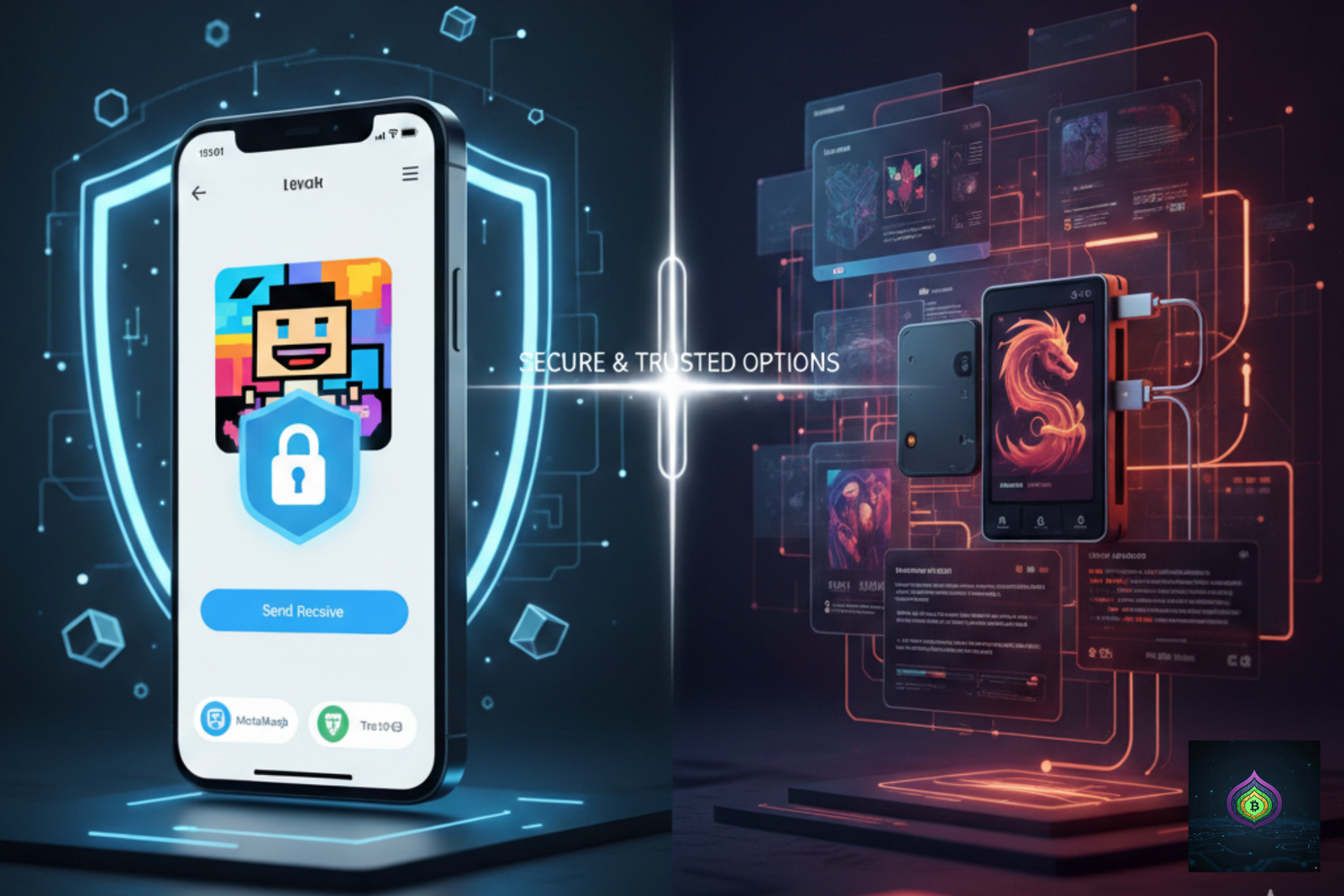
Best NFT Wallets in 2026 : Secure & Trusted Options
MetaMask (Beginner & Advanced)
MetaMask is arguably the most widely-used NFT wallet in the world, offering support for Ethereum and compatible blockchains like Polygon and Binance Smart Chain. Accessible via browser extension and mobile app, MetaMask allows users to interact with decentralized marketplaces like OpenSea and Rarible directly. Its intuitive interface and strong community adoption make it ideal for beginners, while advanced users appreciate its custom RPC networks and integration with multiple DeFi platforms.
Pros:
MetaMask is easy to set up, supports multiple networks, and integrates with virtually every major NFT marketplace. User-controlled seed phrases ensure true ownership.
Cons:
Because MetaMask is a hot wallet connected to the internet, it remains exposed to phishing attacks and insecure browser environments. Users must safeguard their seed phrases strictly, as compromise can lead to total asset loss.
Coinbase Wallet (Beginner)
Coinbase Wallet is a non-custodial wallet distinct from the main Coinbase trading platform. It enables users to store NFTs and tokens independently of the exchange, with private keys kept exclusively on the user’s device. Coinbase Wallet’s simple setup and integration with the broader Coinbase ecosystem make it one of the most approachable options for users new to NFTs.
Pros:
User-friendly interface, strong reputation, and built-in access to NFT marketplaces and decentralized apps.
Cons:
Limited advanced customization and fewer blockchain integrations compared to more flexible wallets, which may frustrate experienced users.
Phantom (Solana) (Beginner & Intermediate)
For NFT collectors on the Solana blockchain, Phantom has rapidly become the wallet of choice. Featuring a polished, intuitive UI and lightning-fast transaction confirmations associated with Solana, Phantom simplifies onboarding and asset management, while powerful features like staking and integrated swap functionality deepen its utility.
Pros:
Great performance on Solana with low fees, clean interface, and built-in decentralized exchange features.
Cons:
Supports fewer blockchains compared with multi-chain wallets, making it less versatile for users with diverse NFT collections outside Solana.
Trust Wallet (Beginner & Advanced)
Trust Wallet is a mobile-first wallet that supports a broad range of blockchains, including Ethereum, BNB Chain, Polygon, and more. It allows users to manage NFTs, tokens, and even interact with decentralized apps directly within the wallet’s secure environment. With strong encryption and optional biometric authentication, Trust Wallet appeals to both beginners and experienced crypto holders.
Pros:
Multi-chain support, mobile convenience, and strong security features.
Cons:
As a hot wallet, it is still susceptible to malware and device compromise if users don’t follow safe practices.
Rainbow (Beginner & Intermediate)
Rainbow Wallet is an Ethereum-focused wallet that places a strong emphasis on user experience and design. It makes browsing, collecting, and showcasing NFTs easy with a visually pleasing interface and NFT gallery. Rainbow also supports ENS domains and token management.
Pros:
Beautiful UI, strong NFT gallery support, and simple onboarding.
Cons:
Limited to Ethereum and some L2 networks, offering less flexibility for multi-chain collectors.
Ledger Live + Ledger Hardware Wallets (Advanced & Security-Focused)
Ledger hardware wallets, used in conjunction with the Ledger Live app, offer one of the most secure ways to store NFTs and crypto across multiple blockchains. As cold storage devices, they keep private keys offline, significantly reducing the risk of remote hacking or malware compromise.
Pros:
Industry-leading security with offline key storage, excellent for large collections and long-term holders.
Cons:
Requires physical device purchase and more setup complexity compared with software wallets — a trade-off between convenience and security.
Trezor + Third-Party Integration (Advanced)
Trezor hardware wallets offer strong, transparent open-source firmware and offline private key storage, similar to Ledger. While native NFT support may require connection through third-party interfaces or wallet bridges, the security benefits make them attractive for experienced users managing valuable collections.
Pros:
Very strong security and open-source ecosystem.
Cons:
Less direct NFT management support without external tools and limited mobile experience.
Enjin Wallet (Gaming & NFT Enthusiasts)
Enjin Wallet focuses on NFTs and gaming assets across several blockchains, including Ethereum and Polygon. With built-in support for collectible management and cross-platform access, Enjin appeals to gamers and NFT project communities.
Pros:
Designed for NFT and gaming ecosystems, multi-chain support, and user-friendly design.
Cons:
Smaller community adoption and marketplace ecosystem compared to MetaMask or Coinbase Wallet.
Argent (DeFi + NFT Users)
Argent is a smart-contract wallet geared toward Ethereum users interested in both DeFi and NFTs. It offers social recovery features, eliminating the need to write down seed phrases, and provides strong security defaults that appeal to users wary of losing access.
Pros:
Innovative social recovery, strong integration with DeFi and NFT markets.
Cons:
Still limited to Ethereum and requires understanding of smart-contract wallet risks.
Math Wallet
Math Wallet is a multi‑chain wallet supporting over 100 blockchains.
Pros:
- Wide blockchain support
- Mobile, browser, and hardware integration
- NFT marketplace access
Cons:
- Interface less polished than competitors
- Smaller user base
Rainbow Wallet
Rainbow Wallet is designed for Ethereum NFTs with a visually appealing interface.
Pros:
- Beautiful NFT gallery display
- Easy for beginners
- Strong Ethereum support
Cons:
- Ethereum‑only
- Higher gas fees compared to Solana or Polygon
Zerion Wallet
Zerion is a DeFi‑focused wallet that now supports NFTs.
Pros:
- Strong DeFi integration
- NFT portfolio tracking
- Multi‑chain support
Cons:
- Advanced features may overwhelm beginners
- Smaller NFT gallery compared to Coinbase
Exodus Wallet
Exodus is a multi‑asset wallet with NFT support.
Pros:
- Desktop and mobile versions
- Supports multiple cryptocurrencies and NFTs
- Beginner‑friendly
Cons:
- Closed‑source software
- Less advanced features for power users
Zerion Wallet
Zerion is a DeFi‑focused wallet that now supports NFTs.
Pros:
- Strong DeFi integration
- NFT portfolio tracking
- Multi‑chain support
Cons:
- Advanced features may overwhelm beginners
- Smaller NFT gallery compared to Coinbase
Comparison Chart — Best NFT Wallets (Security & Features)
| Wallet | Best For | Security Level | Multi-Chain Support | Ease of Use | NFT Marketplace Integration | Cold Storage Support |
|---|---|---|---|---|---|---|
| MetaMask | Beginners, everyday NFT users | ⭐⭐ | ⭐⭐⭐⭐ | ⭐⭐⭐⭐ | ⭐⭐⭐⭐⭐ | ❌ |
| Coinbase Wallet | Beginners, casual collectors | ⭐⭐ | ⭐⭐⭐ | ⭐⭐⭐⭐ | ⭐⭐⭐⭐ | ❌ |
| Phantom | Solana collectors | ⭐⭐ | ⭐⭐ | ⭐⭐⭐⭐ | ⭐⭐⭐⭐ | ❌ |
| Trust Wallet | Mobile users, multi-asset | ⭐⭐ | ⭐⭐⭐⭐ | ⭐⭐⭐⭐ | ⭐⭐⭐⭐ | ❌ |
| Rainbow | Ethereum NFT fans | ⭐⭐ | ⭐⭐ | ⭐⭐⭐⭐ | ⭐⭐⭐⭐ | ❌ |
| Ledger (Nano X / S Plus) | Security-first, high-value collections | ⭐⭐⭐⭐⭐ | ⭐⭐⭐⭐⭐ | ⭐⭐ | ⭐⭐⭐⭐ | ⭐⭐⭐⭐⭐ |
| Trezor (Model T / One) | Security advocates | ⭐⭐⭐⭐ | ⭐⭐⭐⭐ | ⭐⭐ | ⭐⭐⭐ | ⭐⭐⭐⭐ |
| Enjin Wallet | Games & community NFTs | ⭐⭐ | ⭐⭐⭐ | ⭐⭐⭐ | ⭐⭐⭐⭐ | ❌ |
| Argent | DeFi + secure onboarding | ⭐⭐⭐ | ⭐⭐ | ⭐⭐⭐⭐ | ⭐⭐⭐ | ❌ |
Pros & Cons Across Wallet Types
When comparing NFT wallets, several key patterns emerge:
- Hot Wallets like MetaMask, Coinbase Wallet, Phantom, Trust Wallet, and Rainbow are easy to use and excellent for daily interaction with marketplaces, but they require strict attention to phishing, seed phrase security, and device hygiene.
- Cold Wallets like Ledger and Trezor offer the highest levels of security by isolating keys offline, but they trade convenience and immediate access for increased safety and setup complexity.
- Blockchain-Specific Wallets (Phantom for Solana, Enjin for gaming) may offer optimized experiences but sacrifice multi‐chain flexibility unless users maintain additional wallets.
Real-World Risks and the Importance of Secure Wallet Practices
NFT breaches and scams continue to make headlines. In 2023 and 2024, several high-profile wallet compromises involved attackers exploiting malicious smart contracts and phishing links that trick users into signing transactions that drained NFTs and tokens from wallets. Such events reinforce that no wallet is invulnerable unless users combine secure tools with strong operational security: verifying transaction details on-device, using hardware wallets for high-value assets, avoiding suspicious links, and never revealing seed phrases.
Security Concerns: Lessons from NFT Breaches
NFT wallets have been targeted by hackers through phishing, malware, and smart contract exploits. One notable incident was the OpenSea phishing attack in 2022, where users lost millions in NFTs after signing malicious contracts. As OpenSea stated: “The attacker tricked users into signing a malicious payload that authorized the transfer of their NFTs without their knowledge.” This highlights the importance of verifying transactions and using hardware wallets for high‑value assets.
Other breaches include:
- MetaMask phishing campaigns via fake websites
- Discord hacks targeting NFT communities
- Compromised browser extensions leading to wallet drains
Choosing the Right Wallet for You
For beginners, wallets like MetaMask, Coinbase Wallet, Phantom, and Trust Wallet offer an approachable entry point into NFTs and decentralized apps. They balance usability with sufficient security when paired with good habits. Advanced users and long-term collectors may prefer hardware wallets like Ledger or Trezor to secure large collections and reduce exposure to remote threats. Specialized options like Argent and Enjin Wallet add utility for DeFi and gaming ecosystems, expanding what users can manage from a single interface.
Regardless of choice, the guiding principle remains consistent: control your keys, verify transactions, and protect your seed phrases if you want to enjoy NFTs securely in a space that continues to evolve.
FAQ
What is an NFT wallet?
An NFT wallet is a digital application or hardware device that stores private keys, enabling users to buy, sell, and securely hold non‑fungible tokens across different blockchains.
Which NFT wallet is best for beginners?
Coinbase Wallet and Rainbow Wallet are ideal for beginners due to their simple interfaces and integrated NFT galleries.
Which NFT wallet is most secure?
Ledger hardware wallets are considered the most secure because they store private keys offline, protecting against hacks and phishing attacks.
Can I store NFTs on MetaMask?
Yes, MetaMask supports Ethereum and other EVM‑compatible blockchains, allowing users to store, trade, and showcase NFTs directly.
What was the biggest NFT wallet breach?
One of the most notable breaches was the OpenSea phishing attack in 2022, where users unknowingly signed malicious contracts that transferred their NFTs to attackers.
Do NFT wallets support multiple blockchains?
Yes, wallets like Trust Wallet, Math Wallet, and Zerion support multiple chains, making them versatile for collectors with diverse portfolios.