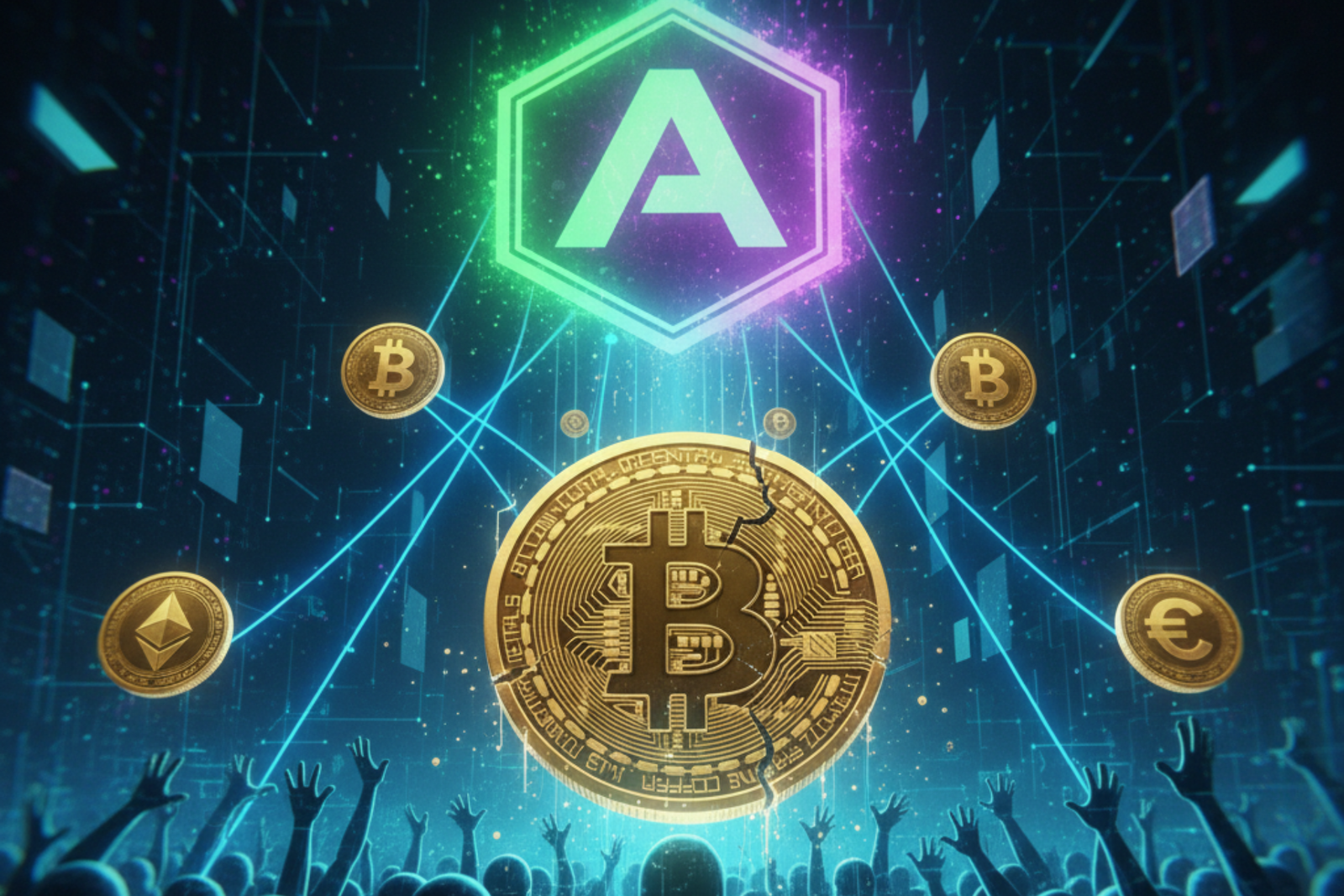
Every bull market, it happens like clockwork. Some altcoin doubles in a week. Twitter explodes with ‘ETH will flip BTC by summer!’ A new layer-1 launches with promises of being faster, cheaper, and smarter than Bitcoin. The headlines declare: the flippening is near.
And every time, Bitcoin shrugs, absorbs the challenge, and reasserts its dominance at the top of the crypto food chain.
But here is the thing — asking whether altcoins can ever overtake Bitcoin is not a simple yes or no question. It depends enormously on what you mean by ‘overtake’, which altcoin you are talking about, and which metric you are measuring. The answer is more nuanced, more fascinating, and more instructive than most crypto pundits will tell you.
Let’s get into the actual data.
| The Framing Matters: ‘Overtake’ can mean market capitalisation, daily transaction volume, developer activity, institutional adoption, or public recognition. Depending on the metric, the answer changes dramatically. Ethereum has already overtaken Bitcoin on several non-price measures. |
Why Bitcoin Is So Hard to Overtake: The Moat Explained
Understanding why altcoins have consistently failed to permanently overtake Bitcoin requires understanding what Bitcoin actually is — and what makes it uniquely durable.
1. First-Mover Advantage & Brand Recognition
Bitcoin is not just a cryptocurrency. It is THE cryptocurrency in the public consciousness. When governments discuss crypto regulation, they say ‘Bitcoin.’ When institutional investors allocate to digital assets, they start with Bitcoin. When media reports on crypto, Bitcoin is the reference point. This brand equity took 15 years to build and is functionally impossible for a competitor to replicate from scratch.
2. The Digital Gold Narrative
Bitcoin has successfully established itself as digital gold — a scarce, decentralised, censorship-resistant store of value. This narrative resonates with the investment thesis that drove gold to a $13 trillion market cap. With a hard cap of 21 million coins and a proven 15-year track record, Bitcoin’s store of value case strengthens with every passing year.
3. Network Security: The Hash Rate Moat
Bitcoin’s proof-of-work network has the highest hash rate in the world — over 600 exahashes per second as of 2024. This makes a 51% attack prohibitively expensive. No altcoin comes close to this level of decentralised security. Ethereum moved to Proof of Stake, trading some of this security moat for scalability and energy efficiency.
4. Institutional & Regulatory Legitimacy
The approval of Bitcoin spot ETFs in the United States in January 2024 — bringing BlackRock, Fidelity, and Invesco into the market — was a watershed moment. These institutions have AUM in the trillions. When they offer Bitcoin to their clients, they are not planning to switch to Solana next quarter. Regulatory clarity around Bitcoin is now far ahead of every other cryptocurrency.
| ⚠️ The Graveyard of Bitcoin Killers: Bitcoin has faced existential challenges from Litecoin (2011), Ripple XRP (2013), Ethereum (2017), Bitcoin Cash (2018), EOS (2018), Cardano (2021), Solana (2021), and dozens more. Each was declared a ‘Bitcoin killer’ at its peak. Each failed to permanently displace Bitcoin. Pattern recognition matters. |
Where Altcoins ARE Winning (And It’s Not Small)
Here is the part most Bitcoin maximalists will not tell you: altcoins have meaningfully overtaken Bitcoin on several genuinely important metrics.
Table 1: Bitcoin vs. Top Altcoins — Head-to-Head Metric Comparison (2024)
| Metric | Bitcoin (BTC) | Ethereum (ETH) | Solana (SOL) | Winner |
| Market Cap (2024 est.) | ~$1.2 Trillion | ~$380 Billion | ~$70 Billion | 🏆 Bitcoin |
| Daily Tx Volume (value) | ~$15 Billion | ~$30 Billion | ~$3 Billion | 🏆 Ethereum |
| Daily Tx Count | ~550,000 | ~1.1 Million | ~60 Million | 🏆 Solana |
| Smart Contract Support | ❌ Limited | ✅ Full EVM | ✅ Full | 🏆 ETH/SOL |
| DeFi TVL | ~$1B (wrapped) | ~$50B+ | ~$5B | 🏆 Ethereum |
| Developer Activity (monthly) | ~600 devs | ~4,000+ devs | ~1,200 devs | 🏆 Ethereum |
| Transaction Speed | ~7 TPS | ~15-30 TPS | ~3,000+ TPS | 🏆 Solana |
| Avg. Transaction Fee | ~$2–10 | ~$0.50–10+ | ~$0.001 | 🏆 Solana |
| Institutional ETF (US) | ✅ Approved Jan 2024 | ✅ Approved May 2024 | ❌ No ETF yet | 🏆 Bitcoin/ETH |
| Store of Value Narrative | 🟢 Strongest | 🟡 Moderate | 🔴 Weak | 🏆 Bitcoin |
| NFT Ecosystem | 🟡 Ordinals | 🟢 Dominant | 🟢 Growing | 🏆 ETH/SOL |
| Energy Consumption | 🔴 High (PoW) | 🟢 Low (PoS) | 🟢 Very Low | 🏆 ETH/SOL |
Source: CoinGecko, DefiLlama, Electric Capital Developer Report, Messari (2024)
The data is clear: Ethereum has overtaken Bitcoin in daily transaction value, developer activity, and DeFi dominance. Solana has overtaken Bitcoin in raw transaction count and speed. These are not trivial metrics — they reflect where the actual innovation and utility is happening.
The Flippening: Could Ethereum Overtake Bitcoin’s Market Cap?
The ‘Flippening’ — the theoretical moment Ethereum’s market cap surpasses Bitcoin’s — has been discussed since 2017. Ethereum came closest in June 2017 when its dominance briefly hit 31% vs Bitcoin’s 37%. It never completed the flip.
For the Flippening to happen, Ethereum would need to either grow dramatically or Bitcoin would need to stagnate. Here are the specific conditions that could enable it:
- Mass adoption of Ethereum-based financial infrastructure (DeFi, stablecoins, tokenised assets)
- Ethereum’s ongoing deflationary supply (EIP-1559 burn mechanism reducing total supply over time)
- Failure of Bitcoin to scale beyond its current throughput limitations
- Regulatory or ESG-driven pressure on Bitcoin’s proof-of-work energy consumption
- A sustained altcoin season where capital rotates from Bitcoin into Ethereum and L2 ecosystems
| Flippening Probability Check (2024): Ethereum’s market cap is roughly 32% of Bitcoin’s. For the Flippening to occur at current prices, ETH would need to triple relative to BTC — or BTC would need to fall by two-thirds. Neither is impossible in crypto, but neither is imminent. Most analysts assign it a 10–25% probability within the next 5 years. |
Could a New Altcoin Overtake Bitcoin?
Every cycle, a new challenger emerges. Solana in 2021. Avalanche in 2021. Aptos in 2022. Sui in 2023. Each promises to be the infrastructure layer that finally makes crypto mainstream. Could any of them actually surpass Bitcoin?
The honest answer is: extremely unlikely, for one structural reason.
Bitcoin’s value proposition is simplicity and scarcity. A fixed supply, no smart contracts to introduce bugs, no upgrades that could alter its monetary policy, no CEO, no marketing team, no venture capital pressure. That’s not a weakness — it’s the entire point. A newer, smarter, faster coin does not compete with that proposition. It addresses a completely different need.
- Newer altcoins compete with each other for the smart contract platform market
- They do not directly compete with Bitcoin’s digital gold narrative
- A new altcoin surpassing Bitcoin in market cap would require displacing both the store-of-value narrative AND institutional infrastructure built over 15 years
- Historical precedent strongly suggests this does not happen — market cap leaders in technology rarely get unseated by raw newcomers
| The More Likely Future: Multiple ‘winners’ in different categories. Bitcoin as digital gold and reserve asset. Ethereum as the programmable financial layer. Solana as the consumer-facing payments and gaming chain. The crypto market will likely look more like equity markets — multiple dominant players in distinct niches — than a winner-takes-all race. |
5 Fast Facts About Bitcoin vs. Altcoins
- Bitcoin has been declared ‘dead’ over 473 times by mainstream media since 2010 — and has hit new all-time highs after every major cycle
- Ethereum processed more value in daily transactions than Bitcoin in 2023 — the first full year it did so consistently
- BlackRock’s Bitcoin ETF (IBIT) attracted $10 billion in assets in its first 60 days — the fastest ETF launch in Wall Street history
- Solana processed over 2 billion transactions in a single month in early 2024 — more than Bitcoin has processed in its entire history
- Despite thousands of altcoins launching since 2011, Bitcoin’s market dominance has never fallen below 38% — and has recovered to 54% by 2024
Frequently Asked Questions
Q: Can any altcoin ever overtake Bitcoin in market capitalisation?
A: It is theoretically possible but historically unprecedented. Ethereum is the only altcoin to have come close, reaching roughly 80% of Bitcoin’s market cap at its 2021 peak. However, Bitcoin has consistently reasserted dominance in subsequent cycles. The most credible scenario for a market cap overtake involves Ethereum achieving mass DeFi and institutional adoption while Bitcoin growth stagnates — a scenario most analysts assign a low-to-moderate probability within a 5-year horizon.
Q: What is the Flippening and has it ever happened?
A: The Flippening refers to the hypothetical moment when Ethereum’s market cap surpasses Bitcoin’s. It has never happened. The closest it came was June 2017 when Ethereum’s market cap briefly reached approximately 83% of Bitcoin’s before falling back sharply. As of 2024, Ethereum’s market cap is roughly 30–35% of Bitcoin’s, meaning it would need to approximately triple relative to Bitcoin to complete a flip.
Q: Has Ethereum already overtaken Bitcoin in any meaningful metric?
A: Yes, in several important ones. Ethereum consistently processes more daily transaction value than Bitcoin. It has dramatically more active developers (4,000+ monthly vs Bitcoin’s ~600). It hosts the majority of decentralised finance (DeFi), stablecoins, and NFT infrastructure. By any measure of smart contract utility and ecosystem activity, Ethereum leads. Bitcoin’s dominance remains in market cap, store-of-value narrative, and institutional recognition.
Q: Why do altcoins keep failing to permanently overtake Bitcoin?
A: Bitcoin benefits from a powerful combination: first-mover advantage, brand recognition, the hardest monetary policy in existence (21 million cap), 15 years of unbroken security, and rapidly growing institutional infrastructure. Altcoins compete primarily on technical features — speed, programmability, fees — but these features target different use cases than Bitcoin’s core proposition as a decentralised store of value. They are generally not direct substitutes.
Q: Should I invest in altcoins instead of Bitcoin?
A: This depends entirely on your investment goals and risk tolerance. Bitcoin offers the lowest volatility among cryptocurrencies and the strongest institutional backing. Altcoins offer higher potential returns in bull markets alongside significantly higher risk. Many experienced crypto investors maintain a core Bitcoin position (50–70%) and allocate a smaller portion to high-conviction altcoins. Diversification across crypto assets does not mean abandoning Bitcoin — it means sizing positions according to your risk capacity.
The Race Is On. Are You Watching It Clearly?
The question of whether altcoins can overtake Bitcoin is not just academic speculation — it shapes every allocation decision you make in your crypto portfolio. And the data tells a clear story: Bitcoin is not going anywhere, but the ecosystem around it is expanding in ways that create real opportunities elsewhere.
The smartest investors are not betting on one winner. They are understanding each asset’s unique value proposition and sizing positions accordingly — with discipline, not FOMO.
Bitcoin will not be beaten by a faster horse.
It will only be displaced if the race changes entirely.